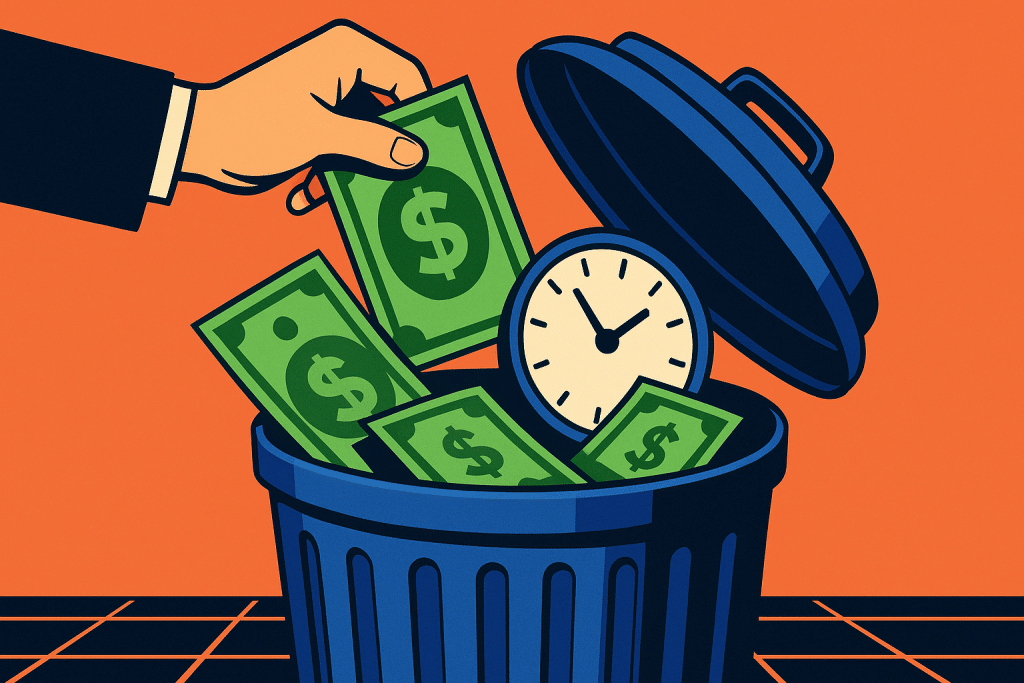
Business Models That Rarely Work: Avoiding Overhyped or Risky Ideas
The allure of a revolutionary business idea is powerful. We’ve all seen the headlines – the overnight successes, the unicorns seemingly plucked from thin air. But behind every dazzling success story are countless ventures that quietly sputtered and failed, victims of flawed assumptions, unsustainable practices, or simply bad timing. Before diving headfirst into your next big project, consider the business models that, historically, have a high rate of failure. Recognizing these patterns can save you time, money, and a whole lot of heartache.
Chasing the Get Rich Quick Dream
Some business models are inherently unsustainable because they promise unrealistic returns with minimal effort. These get rich quick schemes prey on people's desire for easy money, often leading to disappointment and financial loss.
Multi-Level Marketing (MLM) with Saturation
While some MLMs are legitimate, many operate as pyramid schemes. The core problem? They rely more heavily on recruiting new distributors than on selling actual products to genuine customers. Once the market becomes saturated, new recruits struggle to make sales, and the entire structure collapses.
Warning signs to look for:
- Heavy emphasis on recruitment bonuses.
- Requirement to purchase large amounts of inventory.
- Products are overpriced compared to similar offerings.
- Vague or misleading income claims.
High-Yield Investment Programs (HYIPs)
HYIPs promise incredibly high returns in a short period, often with little to no risk. They typically involve investing in obscure or complex financial instruments, and the promised returns are simply too good to be true. In reality, HYIPs are often Ponzi schemes, paying early investors with money from new investors until the scheme inevitably collapses.
Flipping Without Added Value
The idea of buying low and selling high is a fundamental principle of business. However, simply buying a product and reselling it at a higher price without adding any value is rarely a sustainable business model. Competition will quickly erode margins, and customers will seek out better deals elsewhere. Think about adding value through services, unique product combinations, or superior customer experience.
Models Dependent on External Factors Beyond Control
Businesses heavily reliant on factors outside their direct control are inherently risky. Changes in government regulations, economic downturns, or shifts in consumer behavior can quickly decimate their prospects.
Riding a Fleeting Trend
Fad-driven businesses experience rapid growth followed by an equally rapid decline. Consider the fidget spinner craze – manufacturers and retailers who invested heavily in this trend saw their profits plummet as quickly as the fad faded. Sustainable businesses build on long-term market needs, not short-lived hypes.
Over-Reliance on a Single Client or Vendor
Depending on a single client for a large portion of your revenue creates significant vulnerability. If that client leaves, your business could face a catastrophic loss. Similarly, relying on a single vendor for critical supplies can be devastating if that vendor experiences disruptions. Diversification is key to mitigating these risks.
Geographically Restricted Businesses in Declining Areas
A brick-and-mortar store in a town experiencing economic decline faces an uphill battle. Demographics are destiny. Falling population, rising unemployment, and reduced consumer spending can make it nearly impossible to sustain profitability. Consider the long-term economic outlook for any location before investing heavily in a physical presence.
Unrealistic Scaling Strategies
Many promising ideas falter because of flawed assumptions about scaling. Growth without a solid foundation can lead to operational chaos, financial strain, and ultimately, failure.
Franchising Without a Proven System
Franchising can be a powerful way to scale a successful business. However, franchising a business that lacks a clearly defined and replicable system is a recipe for disaster. Franchisees need a proven operating model, comprehensive training, and ongoing support to succeed. Without these elements, the franchise network will crumble.
Aggressive Expansion Without Adequate Capital
Rapidly expanding into new markets or opening multiple locations requires significant capital. Overextending your finances can leave your business vulnerable to unexpected expenses or downturns in sales. Sustainable growth requires careful financial planning and a realistic assessment of your company's resources.
Ignoring Unit Economics
Unit economics measure the profitability of a single unit of your product or service. If each sale loses money, increasing sales will only accelerate your losses. Before scaling, ensure your unit economics are positive and sustainable. Understand your customer acquisition cost, marginal cost, and lifetime customer value.
Business Models Based on Exploitation
Businesses that exploit loopholes, take advantage of vulnerable individuals, or engage in unethical practices may achieve short-term profits, but they are unlikely to achieve long-term success and often face legal or reputational consequences.
Payday Lending and Predatory Lending Practices
Offering high-interest loans to people with limited financial options can be lucrative, but it's also ethically questionable. Payday lenders often trap borrowers in a cycle of debt, charging exorbitant fees and interest rates. Increasingly, regulations are cracking down on these practices, making them less viable.
Free Services with Hidden Costs
Offering free services that require users to share their personal data or agree to hidden terms and conditions can generate revenue through data collection and targeted advertising. However, these practices are facing increasing scrutiny as consumers become more aware of privacy concerns. Transparency and ethical data handling are essential for building trust and avoiding regulatory backlash.
Exploiting the Gig Economy Without Fair Compensation
Some businesses rely heavily on gig workers, paying them low wages and providing limited benefits. While this can reduce labor costs, it can also lead to high turnover, low morale, and negative publicity. Sustainable businesses recognize the value of their workers and provide fair compensation and opportunities for growth.
Models Dependent on Unrealistic Technological Promises
Basing a business on technologies that are not yet fully developed or commercially viable can be a huge gamble. Consider the dot-com boom, where many companies built around unproven internet technologies quickly went bust.
Overhyped Blockchain Applications
Blockchain technology has the potential to revolutionize various industries, but many proposed applications are still impractical or unnecessary. Building a business solely on the hype surrounding blockchain without a clear understanding of its limitations can lead to wasted resources and unrealistic expectations. Focus on solving real-world problems where blockchain offers a tangible advantage.
Unproven AI-Driven Solutions
Artificial intelligence is rapidly advancing, but many AI-driven solutions are still in their early stages of development. Building a business model that depends on AI to perform tasks that are currently beyond its capabilities is a risky proposition. Focus on leveraging AI to augment human capabilities, not replace them entirely.
Virtual Reality (VR) Without a Clear Use Case
Virtual reality technology is improving, but its widespread adoption is still limited. Building a business solely around VR without identifying a clear and compelling use case is unlikely to succeed. Focus on applications that offer genuine value to users, such as immersive training, remote collaboration, or interactive entertainment.
The Importance of Due Diligence
Before committing to any business model, conduct thorough due diligence. Research the market, analyze the competition, assess the risks, and develop a realistic financial plan. Don't be swayed by hype or the promise of easy money. Focus on building a solid foundation, providing real value to customers, and operating with integrity.
Here are some questions to ask yourself:
- Is this business model sustainable in the long term?
- Does it provide real value to customers?
- Are the unit economics sound?
- Is it ethical and compliant with regulations?
- What are the potential risks and how can they be mitigated?
Conclusion: The Path to Sustainable Success
While there’s no guaranteed formula for success in the business world, avoiding fundamentally flawed business models can significantly increase your odds. By recognizing the patterns of failure, conducting thorough research, and focusing on creating real value, you can build a sustainable and profitable business that stands the test of time. Don't chase the fleeting promise of get rich quick schemes; instead, focus on building a solid foundation for long-term success.